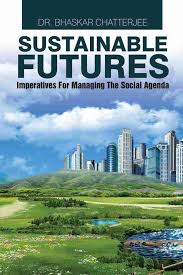

Across the world, the concept of Corporate Sustainability is viewed from myriad perspectives. Some businesses look at it as a stand-alone concept, whereas some others include it as a facet within the broader area of business responsibility; still others view it as an integral part of their business plans and there are those who see it as honest compliance of existing legislation. The eagerness to appear as environmentally and socially responsible surfaces at various levels; diverse means are employed to embed the concept of sustainable business and varied paths are followed to encourage it. However, whilst these differences remain, the rationale is two-fold: to give back to society some of what is being taken from it; and to save the inhabitants of the globe from the horrors of environmental degradation. At the very core of the concept, however, is that initiatives and projects directed at sustainable development and social responsibility are not only good things to do but they make good business sense as well. They help businesses increase their revenue, enhance market access, increase productivity, accrue savings in cost, augment access to capital, reduce risk, obtain licenses to operate, retain and attract good quality human capital and significantly boost brand value and reputation. Ultimately, it all adds up to businesses attaining sustainable competitiveness. The rise of the concept of business responsibility can be attributed to several processes. Most fundamentally, a shift in the concept of the corporation is slowly taking hold and it is being viewed less in the light of its physical capital and more as a “community with a purpose”. Civil society activism and the “watch dog” role they have played, have also raised awareness about sustainability issues. Their efforts have elicited concrete commitments and responses from businesses. Going one step further, they have in many instances, collaborated with business entities in successfully executing many exemplary projects. In this path breaking work, Dr. Chatterjee with the help of several broad brush strokes, paints a fascinating canvas that at once provokes, instigates and compels attention. He delineates the roles that business and industry can play to contribute to national and global development in a responsible, truly evolved way. He shows how governments, corporates and civil society organizations can synergize their efforts to build a whole new paradigm of development that is sustainable, humanistic and inclusive. All of this adds up to what can best be described as the Chatterjee Code. About the Author Dr. Bhaskar Chatterjee is presently the Director General and CEO of the Indian Institute of Corporate Affairs. In 1990, he authored his first book – a path breaking work entitled Japanese Management – Maruti and the Indian Experience. Thereafter, he wrote his now famous Human Resource Management – A Contemporary Text which has gone into its fourth revised and enlarged edition in 2009. Most recently, his book, Leadership India – Leading Change, Changing Lives, was released in February, 2011. Since 2009, Dr. Chatterjee has developed a strong interest and an abiding commitment to the twin causes of “Corporate Social Responsibility” and “SustainableDevelopment”.